
Between Bliss and Oblivion: Liberation Through Death and Desire in Harold and Maude and Y tu mamá también
Updated: Mar 2
We spend our youth believing that life stretches endlessly before us. Our bodies respond effortlessly to our will, our minds pulse with possibility, and our options feel limitless. In youth, death exists only as an abstract concept, something distant, almost fictional, that happens to others, but never us. Yet as we move through time, the illusion of impermanence begins to erode as we come to understand that living is not separate from dying but defined by it, that the awareness of our own mortality gives shape and urgency to existence. Through Hal Ashby’s Harold and Maude (1971) and Alfonso Cuarón’s Y tu mamá también (2001), this tension between vitality and impermanence becomes a central force as they confront what it means to live after the impact of death, showing how that awareness can both transform not only how we see the world but also how we move through it.
I’ll start chronologically with Harold and Maude: a personal all-time favorite of mine. Set in the Bay Area during the early seventies, the film begins by having us meet Harold, a wealthy, 20-year-old man who has a morbid obsession with death, which he exhibits through elaborate stagings of suicide, collecting photos of corpses, and attending funerals for amusement as an attempt to get attention from his very controlling and status-obsessed mother. His mother tries to dictate his every move from the women he dates to the clothing he wears, leading Harold to be aloof, deeply unhappy, and exist in a hollow world of rituals and social expectations, that is, until he meets Maude. One day while crashing a funeral, Harold meets Maude, a lively and eccentric 79-year-old woman, full of joy and unconventionalities who steals cars, climbs trees, and lives each day with curiosity and spontaneity. Fascinated by her zest for life, Harold spends more and more time with Maude, and they develop a highly unusual relationship. Through their adventures, ranging from joyrides to impromptu thefts of cars to philosophical conversations, Maude encourages Harold to break free from his obsession with mortality and embrace living fully.
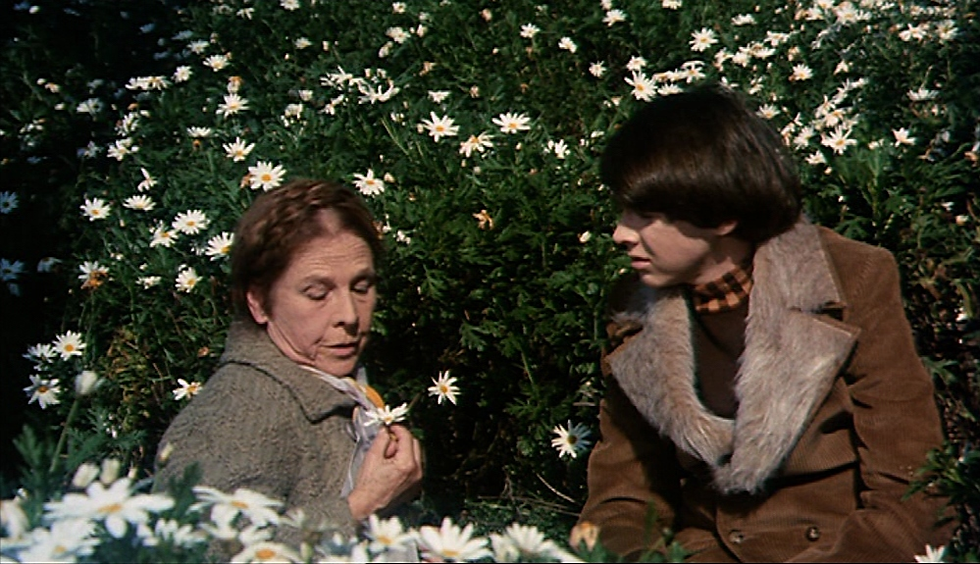
As Harold grows closer to Maude, he begins to resist his mother’s attempts to control him as she arranges blind dates, pressures him toward a conventional life, and becomes increasingly frustrated by his disregard for her expectations, while Maude teaches him that life is meant to be lived in the moment, with courage, humor, and compassion. Over time, their bond deepens into a tender, very unconventional romance, rooted not in superficial attraction but in a profound emotional and philosophical connection. Eventually, Maude reveals that she plans to end her own life on her 80th birthday, choosing her departure on her own terms, which comes to make sense to viewers as we’re offered a brief but powerful glimpse at the numbers tattooed into her forearm indicating she survived the Nazi death camps. She reveals to Harold that she has taken an overdose of sleeping pills and will be dead by the next day, and Harold immediately rushes her to the hospital, but she succumbs to the overdose and dies. This scene is intercut with a devastated Harold after Maude’s death speeding down a country road and appearing to have died by suicide by driving the car off a cliff, which perfectly encapsulates one of the film’s main themes of the delicate boundary between life and death. But following the crash, Harold is shown standing atop the cliff with Maude’s banjo singing “If You Want to Sing Out, Sing Out” by Cat Stevens, whose music is featured prominently throughout the film.

While Harold’s awakening unfolds through Maude’s exuberant defiance of death, the journey of Julio and Tenoch in Y tu mamá también reveals a different, more bittersweet encounter with mortality. Across the world and 40 years later, Y tu mamá también takes place in Mexico just before the turn of the 21st century, where two teenage friends, Julio and Tenoch, are introduced. Julio comes from a middle-class background while Tenoch is the son of a wealthy, politically connected family, yet both are about 17 years old and spend their time partying, getting high, and talking about sex. We meet them as their girlfriends are leaving for Italy for the summer, leaving the boys to amuse themselves for the next couple of months. At a wedding, they meet Luisa, a 28-year-old Spanish woman who is married to Tenoch’s cousin Jano. Flirting with her, Julio and Tenoch tell Luisa about an invented beach called Boca del Cielo (Heaven’s Mouth) and invite her to come with them, though they have no idea if it really exists or not, but she laughs it off and declines. A few days later, Luisa receives a call from Jano who tearfully confesses that he has cheated on her. After hanging up, Luisa calls the boys and tells them she wants to come to the beach with them. Surprised but excited, Julio and Tenoch borrow a car from Tenoch’s sister and set off with Luisa, pretending they know where they’re going. The three begin a long drive south through rural Mexico, filled with casual conversation, teasing, and growing sexual tension, mainly coming from the boys’ side.

Along the way, they stop at roadside eateries, swim in motel pools, and pass through poor villages rife with political turmoil. During the trip, Luisa gradually takes control of the situation by intentionally trying to seduce the boys through dancing, drinking, and asking them intimate questions about sex and love. After a night of drinking in a small town, she sleeps with Tenoch, which greatly upsets Julio, leading him to tell Tenoch out of jealousy that he once slept with Tenoch’s girlfriend, which leads to a fight, but then Luisa ends up sleeping with Julio as well. Tensions rise among the three until they finally find a real beach with the help of local fishermen– a beautiful, secluded place that turns out to be called Boca del Cielo, just like the name they had invented, where they relax and reconcile. That night, after drinking mezcal, all three share a sexual encounter with one another before falling asleep. The next morning, Luisa leaves early without waking them, and the boys return to Mexico City, where they part ways and stop speaking to each other. Some time later, a narrator reveals that Luisa died of cancer a month after the trip, suggesting it was a last-ditch effort for her to try and regain a semblance of control over her existence. Julio and Tenoch run into each other by chance at a cafe where they talk briefly about Tenoch studying abroad and Julio living with his girlfriend. Before leaving, Tenoch tells Julio that Luisa knew she was going to die before the trip and the narrator notes that they will never see each other again.

Despite the cultural and time differences, both of these films explore the inevitability of death through the vitality of those around it. In each film, the older woman—Maude in Harold and Maude and Luisa in Y tu mamá también—functions as a way for the boys to understand their mortality by showing them that life isn’t defined by death but rather that death is defined by life and how one chooses to live it. This is particularly evident in Harold and Maude as Maude literally shows Harold how to bring vibrancy into a life previously marked with defeat and dejection through her own way of life by simply letting him be a part of hers. Her passionate existence was strong enough to alter the course of his, alluding to the overlooked impact that women have over all. However, in Y tu mamá también, the boys are left with a much less positive influence as their foray into understanding life destroys their bubble of naivety and immaturity by showing them that real living comes with the irreversible consequences of loss, separation, and the sobering awareness that youth, like life itself, is fleeting. While Maude chose the timing and manner of her own death, Luisa’s life was abruptly taken from her by external forces, leaving the boys to grapple with the suddenness and unfairness of loss. This difference in agency affects them differently: Maude’s death prompts reflection on choice, mortality, and the weight of deliberate action, while Luisa’s death confronts them with vulnerability, helplessness, and the consequences of violence outside their control, deepening their understanding of responsibility and the unpredictable nature of life.
Through the dynamic of older women and younger men in both films, a sense of motherhood is conveyed by the way Maude and Luisa nurture, guide, and ultimately liberate the young men they encounter. While neither woman is a literal mother and they do also interact with these men in sexual ways, each embodies a maternal presence through her emotional intelligence, life experience, and capacity for acceptance. Maude, with her warmth and irreverence, offers Harold what his biological mother cannot in understanding and encouragement to live authentically. Her “motherhood” is one of emotional rebirth rather than authority, teaching him that love is rooted in freedom, not control. Similarly, Luisa’s role toward Julio and Tenoch mirrors a maternal figure who leads her “children” out of ignorance and into self-awareness. Through her affection, honesty, and eventual absence, she initiates them into the realities of desire, mortality, and consequence, which they weren’t previously aware of due to their youthful selfishness and narcissism. In both films, the older woman becomes a symbolic mother whose lessons are not domestic or nurturing in a traditional sense, but existential by showing the boys how to grow up by confronting the beauty of impermanence.

Beneath the surface, both films weave the intertwined energies of love and death as the fundamental forces shaping human experience. In Harold and Maude, romantic and sexual connection become a metaphor for spiritual renewal as Harold’s intimacy with Maude represents more than just an act of rebellion against societal norms but a symbolic resurrection. Through Maude, Harold realizes that love, especially when freed from convention, has the power to counteract despair and give meaning to existence. Their physical relationship, controversial and unconventional to the highest degree, becomes an assertion that genuine connection transcends age, propriety, and fear, becoming a manifestation of true love rather than a superficial attraction. Maude’s choice to die at the height of her exuberance underscores that love and death are not opposites, but reflections of the same truth that everything is temporary and that through its brevity, life is given its intensity. For Maude, death is not tragedy but autonomy as she chooses to exit on her own terms just as she has chosen to live freely. In parallel, Luisa’s sexuality in Y tu mamá también is not merely provocative; it is her final embrace of life before dying, a deliberate act of reclaiming agency over her body and narrative. Her seduction of Julio and Tenoch is not born out of manipulation but of generosity as she leads them, perhaps unknowingly, through an initiation into emotional maturity. By sleeping with both boys, she exposes the fragile egos and hidden jealousies that underlie their friendship, forcing them to confront the uncomfortable realization that desire is often selfish and transient. Her death, revealed only after the journey ends, transforms their physical experience into something existential, as if her touch lingers beyond her absence, reshaping how the boys perceive intimacy, mortality, and memory. Both Maude and Luisa thus subvert the traditional stigmas surrounding the older woman by redefining her as a vessel of wisdom and transformation that is not a tragic figure to be pitied. For them, love isn’t a denial of death but an embrace with it, a way of saying yes to life even as it slips away, teaching not only the young men they encounter but the audience as well not how to avoid loss, but how to find beauty and meaning within it.
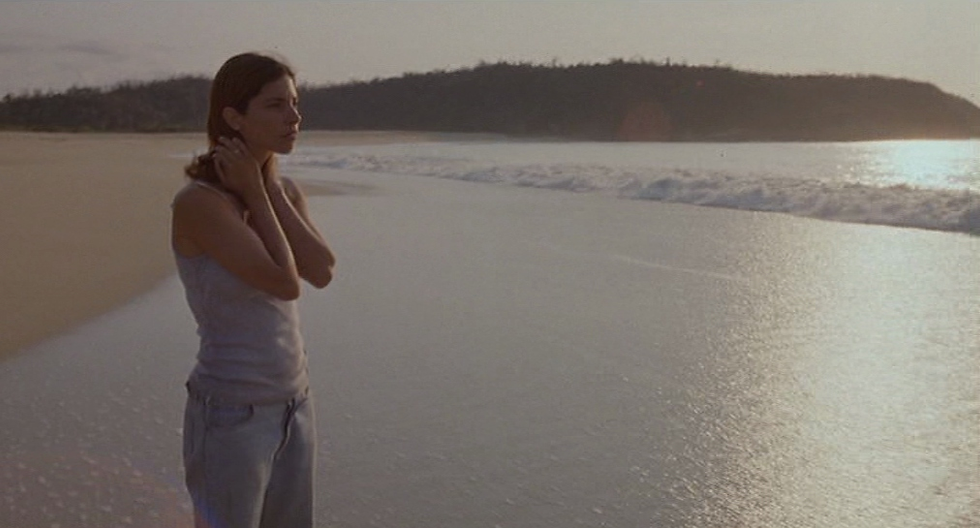
Each film approaches death as an intimate teacher by depicting it as an experience that reshapes how the living perceive love, freedom, and selfhood, but each does so through a distinct cultural and emotional lens. In Y tu mamá también, death is woven quietly into the texture of Mexico itself with the anonymous deaths of workers, migrants, and the poor echoing beneath the protagonists’ privileged escapade. It’s not merely Luisa’s private fate but a reflection of mortality as a social constant, forever inescapable and indifferent, as their roadtrip becomes a movement through layers of life and decay, where each landscape and encounter hints at the fragility underlying youthful recklessness. Luisa’s secret illness turns her body into a site of both pleasure and disappearance as she channels her dying into vitality using sex, laughter, and connection as ways to reclaim agency from her inevitable end even though Julio and Tenoch, ignorant of her condition, mistake her openness for indulgence until they learn the truth, at which point death ceases to be abstract and becomes the condition that gives their past joy its importance. In contrast, Harold and Maude externalize the same realization through eccentric ritual and performance as Harold, who stages his own deaths to mock a society that fears mortality, treats death as a game until Maude reintroduces him to its gravity and grace. Where Luisa embodies a sensual, private confrontation with dying, Maude transforms death into a public act of affirmation, a truly American thing to do, with her suicide not as despair but as the culmination of a reclaimed and fully chosen life. In American culture, death is often dramatized, ritualized, or performed as a way of asserting identity, legacy, or moral stance—think of public eulogies, last words, or even the cultural fascination with celebrity deaths. By turning her own death into a conscious, visible statement, Maude participates in this tradition of performative mortality, using it to assert autonomy and control, to leave a final impression on the world and to model the ultimate expression of individualism.
Taken together, the films form a dialogue about mortality across generations and cultures; in Cuarón’s Mexico, death hums beneath the noise of youth, forcing growth through loss and silence, while in Ashby’s America, it is a performance that reawakens feeling in a numbed soul. Yet both end with the same truth: the awareness of death strips away illusion and compels a more authentic kind of living, for better or worse. The boys in each film are left behind not only by the women who awaken them but by the versions of themselves that once denied death’s presence and what remains is not grief but comprehension and the recognition that mortality is not life’s opposite, but its most honest measure.
Bibliography
“Harold and Maude (1971) - Plot.” IMDb, https://www.imdb.com/title/tt0067185/plotsummary/. Accessed 27 October 2025.
Harold and Maude Dancing. Film Grab, https://film-grab.com/2010/10/05/harold-and-maude/#bwg915/56468.
Harold and Maude in a Field of Flowers. Film Grab, https://film-grab.com/2010/10/05/harold-and-maude/#bwg915/56513.
Harold and Maude Looking at the Sunset. Film Grab, https://film-grab.com/2010/10/05/harold-and-maude/#bwg915/56481.
Luisa, Julio, and Tenoch in a Car. Film Grab, https://film-grab.com/2017/02/08/y-tu-mama-tambien/#bwg243/14516.
Luisa Standing at the Beach. Film Grab, https://film-grab.com/2017/02/08/y-tu-mama-tambien/#bwg243/14499.
Tenoch, Luisa, and Julio Sitting on a Beach. Film Grab, https://film-grab.com/2017/02/08/y-tu-mama-tambien/#bwg243/14496.
“Y tu mamá también (2001) - Plot.” IMDb, https://www.imdb.com/title/tt0245574/plotsummary/. Accessed 27 October 2025.
Cyd Okum is a freshman at Barnard College studying Film and Art History. She loves film, listening to music, and painting.