
Imposter Syndrome: The Timelessly Paranoid Masculinity of John Carpenter's The Thing
Updated: Feb 16
This article contains stills depicting gore and violence, as well as mild spoilers for both
The Thing (1982) and (2011)
Although the post-irony poison in our 2026 water may make us inclined to giggle at the prospect of an isolated group of crewmates being picked off by a mysterious “imposter” identical to themselves, John Carpenter’s 1982 masterpiece The Thing remains heralded as one of the greatest (horror) movies of all time–while the same cannot quite be said for its 2011 prequel. Based on John W. Campbell Jr.'s 1938 sci-fi novella Who Goes There?, Carpenter's film follows a group of researchers and supporting personnel in an arctic research base as they discover–and are subsequently tormented by–an ancient, frozen alien that can absorb and shapeshift into any living being. Despite The Thing’s status as a cult classic long reclaimed from the contemporary audiences and critics who threw it to the wind, the movie’s history as a remake is often lost in the canon. In 1951, the original novella was turned into the black-and-white horror classic The Thing From Another World, named for the original story’s alternatively printed title.
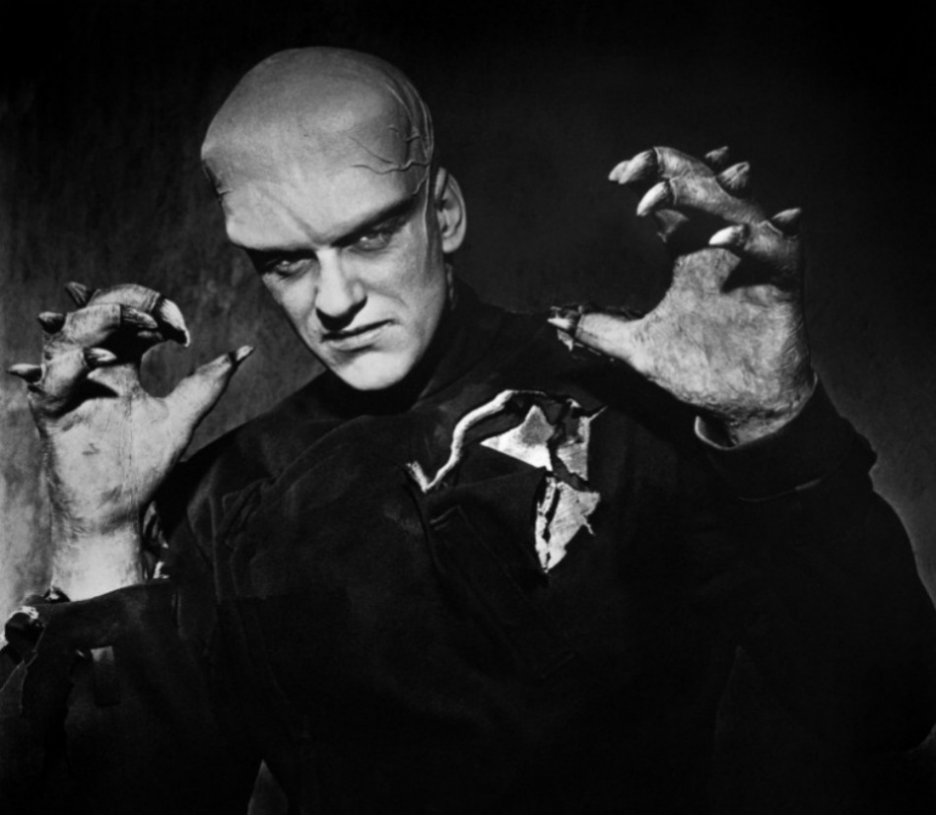
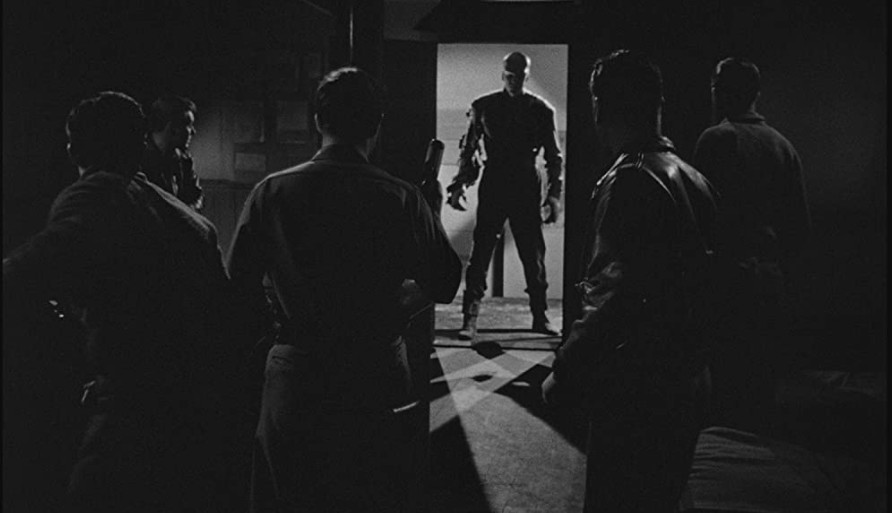
The titular 50’s Thing /RKO Pictures
Although the film, directed by Christian Nyby, fits the original description of an isolated research outpost discovering a monster in the snow, where Who Goes There? sees the alien as a stealth shapeshifter, The Thing From Another World reimagines it as a humanoid vegetable monster whose unsettling differences give it its imposing nature. This takes the novella’s destructively internal fears and churns out an elevated postwar us vs. them narrative about the power of science and unity against an explicitly external threat.
It wasn’t until 31 years later–when the country’s cold war paranoia flipped back around to the “it could be any of us” dread of the source material–that Carpenter’s magnum opus would hit theaters, sticking much closer to the original text and dropping the rest of the title–along with the connotation that the true horror comes from anywhere other than your fellow man.


The Thing (1982 ) / Universal Pictures
Carpenter’s The Thing opens in the vastness of space as a UFO hurls through the air into our beloved pale blue dot. Sometime later, we are thrust into a gorgeous Antarctic glacierscape as an even more gorgeous husky gallops through the powdery snow. In pursuit of this not-so-good-boy is a helicopter full of two angry Norwegians, who are promptly killed when their unintelligible aggression is met by the calloused hands of the protective Americans whose base the adorable pup wanders onto.
We come to meet the crew of Outpost 31, made up of twelve men (some more levelheaded than others): Kurt Russel as the unspoken leader R.J. “Mac” MacReady (sporting what is probably the greatest head of hair ever put to film), a debuting Keith David as the elusively cool “Childs,” Wilford Brimley (of “Diabeetus” fame) as the hostile biologist Dr. Blair, and a slew of others who vary in terms of fleshed-out-edness.
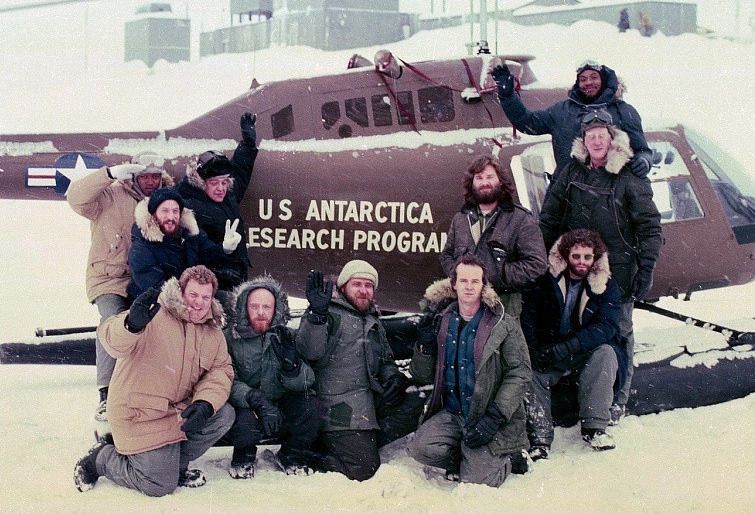
After the dog is taken in, a group of the guys decide to head to the neighboring Norwegian's base to see what all the fuss was about. Upon investigation they discover a giant spaceship preserved in the snow, a block of ice extracted, and the abandoned, tarnished outpost. Inside the latter are several dead bodies, among which include a man with wrists leaking frozen blood and a horrifyingly malformed human (?) with two faces and far too many limbs. Additionally, they find the thawed out block of ice taken from nearby the ship, presumably where an ejected pilot was removed and angrily awoken by the Norwegian researchers. In both the novella and the 1951 version, we see our main characters discover the ship and unleash the alien themselves, but Carpenter's film positions itself in the chronological aftermath of those stories' events; the Americans discover what’s left of the Norwegians and have to deal with the consequences, making it almost a quasi-sequel to an alternate version of the original film.


The fellas, the spaceship, and the “dead” creature they find (informally dubbed Split-Face)
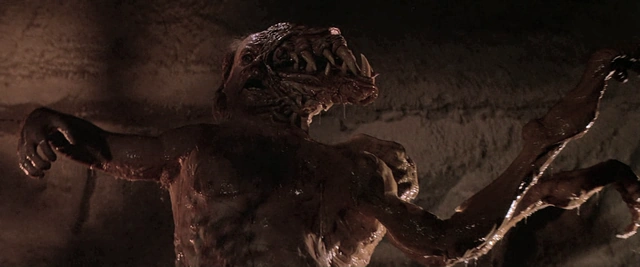
The crew returns to Outpost 31 with the aforementioned body in tow and the knowledge that there very well could be an alien on the loose–one likely responsible for whatever the hell happened to this guy (guys?). And thus, in a rather sad scene, later that same night, the new husky unveils itself as said Thing to the other dogs in the kennel, its head falling off and dozens of tentacles and tendrils emerging from its body to attack. After it bubbles up and turns into an unrecognizable blob of flesh and mouths, it is torched by Childs and autopsied by Blair. The biologist deduces that the husky was in fact the alien Thing, or at least part of it; a dangerous organism that takes over and assimilates any living creature it comes into contact with down to the cell, exploding as a mess of limbs, tentacles, and teeth when it feels threatened or seeks to “infect” a new specimen.


Dog-Thing (Edit courtesy of ScreenRant) / ? being attacked by the dog-thing
What follows is a masterfully tight and dreadfully paranoid horror-mystery, as characters lose trust in their fellow men–who are picked off and extraterrestrially assimilated both on and off screen. A key tenet of The Thing is that the audience perspective is less than non-omniscient, often restricted to even less than what the characters know at times. Take the above moment, one of the film’s most infamous and mysterious. Before it was revealed and promptly killed, the dog was walking among the crew for hours, leaving it to have assimilated any of our main characters unbeknownst to us or any of them. Early on, we watch as it approaches a character sitting alone in their room. The thing is, we cannot–and never do–see the character, who is certainly thingified offscreen. The Thing spread to the man, then reassumed both its husky and new forms, remaining unseen by the crew. We know the dog is revealed and killed later, but by then it has already infected whoever this is, who likely went on to attack another fellow crew member for all we know. Countless fans have tried to draw a chronology of assimilations over the years, but it is truly impossible to come up with anything definitive, and that’s why the film works so well. The brilliant practical effects during moments of Thing-action are repulsive–and they still hold up–while the mysterious narrative lends for a unique and exciting viewing experience. The ending–which won’t be spoiled here–leaves just about everything up in the air, abandoning the audience with a burning sense of nihilism and a bloody, snowy puzzlebox to unravel. We don’t know what the Norwegians were up to or how they came to die the way they did, we don’t know where The Thing comes from or why, and by the end, we don’t even know who is who or when they became that way; just the way it's meant to be.


A tense moment of paranoia / A thing-ified character revealing itself later on in the film
Alas, to audiences and critics alike, Carpenter’s The Thing was an absolute misfire, grossing only $21 million against its $15 million production budget. To that end, Roger Ebert called it a “barf bag movie” containing “superficial characterizations,” saying its intentionally mysterious narrative and chronology of infection “takes the fun away,” and Alan Spencer, in his now infamous Starlog Magazine review, claimed Carpenter was better suited to direct “traffic accidents, train wrecks, and public floggings” (dude needed to chill out). In the years since, however, retrospective praise for the film has seemed to grow exponentially, with it currently holding a highly coveted 8.2/10 on IMDb and placing 101st on Letterboxd’s top 250 narrative feature films list. Although the absolutely revolting practical effects (by the incredible Rob Bottin and his team) and perhaps unfamiliar degree of audience omniscience (or lack thereof) don’t necessarily make it difficult to see why contemporary moviegoers were so against The Thing, those same features are what make the film so incredible.
But if The Thing From Another World reflected America’s science trumps evil post-war sentiments and The Thing was the trust-no-one horror rooted in late cold war paranoia, then 2011’s The Thing perfectly encapsulates our modern digital-information age desire to know the answer to anything and everything all the time. After the success of Zack Snyder’s Dawn of the Dead (2004), the film’s producers Marc Abraham and Eric Newman began sifting through the Universal Studios vast IP library for new material to recycle, eventually landing on Carpenter's at that point, finally, cult classic. Although the pair recognized an attempt at a remake would be only a few degrees short of blasphemy, a prequel was not off the table, and thus Matthijs van Heijningen Jr.’s The Thing unfortunately tells the story of the mysterious Norwegian researchers and their encounter with The Thing, all the way down to the dog running away at the end as the two pilots chase it.

Mary Elizabeth Winstead and Ulrich Thomsen in The Thing (2011) / Universal Pictures
Off the bat, Heijningen Jr.'s The Thing puts itself in an undesirably precarious position. Principally, the film must make an argument for its own existence, while formally being forced to tell a story that maintains the most minute spatial continuity once thought mundane by Carpenter and co: every detail present as Mac and Copper peruse the Norwegian base in the original have now become anchors the film must reverse engineer its way into (see also Rogue One)–and it does so religiously. Burned hallways, corpses, and even an axe in a wall all must be retrofitted within the context of this “new” story. As for the movie’s inception, Abraham and Newman’s disregard for the concept of a remake, while commendable, should have extended in the opposite chronological direction, as the studio overestimated how many of the film’s fans truly cared to have all their questions answered. The zealots that resurrected the original film to a relevant status were assuredly not as inclined to explore a retrofitted key to what made the puzzle box of Carpenter’s classic so alluring, and it’s more than clear why.
The lack of interest is evidenced by the film’s grossing $31.5 million on a $38 milion budget, but extending beyond that, its structure proves incredibly tedious. Balancing the tightrope of being something innovative while environmentally constrained by its source material creates a kind of quasi-Thing. There are new beats and new characters (women this time!), the latter meaning all-new yucky forms for our titular friend to assimilate (and deteriorate), but the story of the Norwegian's as addressed in the Carpenter version (and effectively seen in From Another World) is not particularly dissimilar from what the 12 lads go through. The Norwegians discover the alien, take it back to their base, and realize it has the capacity to assimilate those among them. Then, paranoia ensues, methods of testing are derived, and ultimately a sneaky Thing attempts to take off into space before assuming an ultimate Thing form and dying in an explosion. Evidenced by the titles alone, the skeleton is very much the same as its theatrical predecessor (but chronological successor), and although Mary Elizabeth Winstead proves very strong as the lead, the (albeit rehashed) internal conflict functions pretty well, and the violence and Thing’s forms are plenty exciting, the movie boils down to an ultimately unanswered so what?
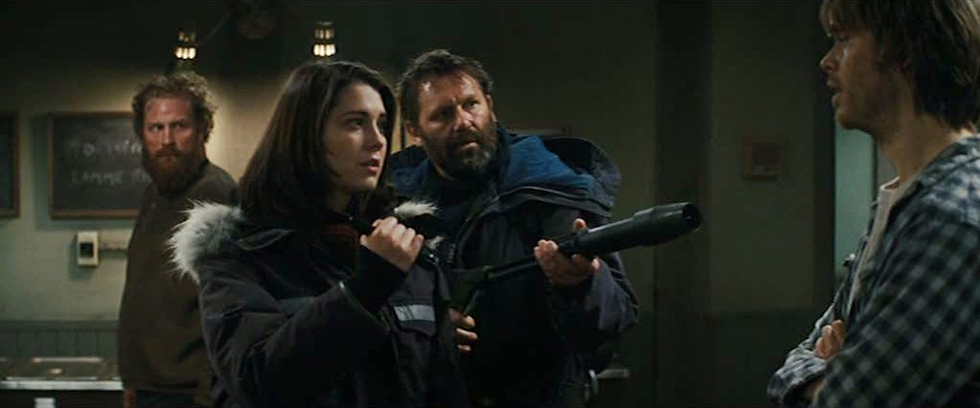

More tense paranoia! / The birth of Split-Face, remember him?
Perhaps the best encapsulation of the film’s struggles is its climax. The characters have spent the preceding runtime making sure the base is as exact as Mac and Copper will come to find it in a day’s time, and thus the final confrontation’s explosion–an event that happens in the original and is thus essential to the structural recreation of its narrative–must take place somewhere else. In an explicatory nature nothing short of excruciating, the film takes us inside the alien’s spacecraft (booooooo!) as it attempts to boot up in the ice. Revealing the technological capabilities of The Thing is insulting enough, but the film goes so far as to provide some sort of pilot/power source/bullshit pixel swarm moving around as an explanation for the species’ scientific functioning. Although, the initial plan for the film actually saw a pilot alien appear on-screen and confront the lead characters (an animatronic was built and can be seen online, though I'm not sure why anyone would choose to do so), so maybe some degree of gratuity for this alternate ending is fair. The final, admittedly not-good-at-all-looking battle with the Thing is the result of test-screening suggestions, which forced the crew and VFX team into a rushed and unfortunate squeeze.

“Blair-Thing” (1982) / “Sander-Thing” (2011)... woooff
Although sympathy is certainly applicable and there is arguably no one truly at fault other than those mysterious test audiences, the CGI-slathered “big bad” simply pales in comparison to the genius of Rob Bottin’s team’s work on the 1982 original. The monsters of the film in general—while certainly taking creative and admittedly disturbing forms—simply look worse than the classic practical effects. The real tragedy of The Thing (2011) is that the film was shot mostly practically–with beautiful puppets, animatronics, and prosthetics rivaling those of the original–but poor test audiences and studio pressure unfortunately led the art to be overcorrected with CGI. The results prove rubbery and distractingly unconvincing, especially side by side with their classic counterparts.


2011 Split-Face on-set /
Lance Anderson and Michiko Tagawa sculpting the ‘82 Dog-Thing / Stan Winston School of Character Arts
Thus, what remains in finality is a cinematic product nothing short of frustrating. Although the premise is certainly delicate, a fascinating story could be told through an approach like this. However, the film’s dedication to retro-elucidation, middling effects, and structural boundedness to its predecessor makes the 2011 prequel The Thing function as a weak recreation of what it is attempting to adapt: an amalgamation of concepts that attempts to mimic its genetic material, but ultimately produces something hideous and detestable. Sound familiar?
Carlos Jimenez is a freshman at Columbia College studying Film and Psychology. He enjoys writing, running, and hopelessly rooting for the Yankees.