
Step Aside "Elf": A Ranking of All the "Love Actually" Storylines
The holidays are my absolute favorite time of the year. Green and red lights, snow, Santas on every street, and voluminous Christmas trees. My go-to gateway activity to the holidays includes a cup of hot cocoa by the fireplace with none other than the perfect Christmas movie. For me, that movie has to be Love Actually (2003). In a world of Die Hard and Elf fans, I will argue in favor of Love Actually every holiday season.
If you have ever wondered how many shades of love can fit into a single British Christmas movie, Richard Curtis’ Love Actually (2003) has the answer—about nine. This film interweaves nine completely different stories that, while having their own nuanced complexities. Love is the one emotion connecting all these individuals together. These special stories range from father-son relationships to forbidden love stories to the friendly relationship between a singer and his producer. However, while each journey through relationships is unique in its own way, I am here to rank all the stories. Take a seat, because not every story is sunshine and rainbows in my opinion.
Side note: I will not be reviewing the storyline featuring the two soft/hard-core porn body doubles because my dad had cut out that entire storyline from the Love Actually DVD that I watched.
8. An Englishman Trying to Find Love in America
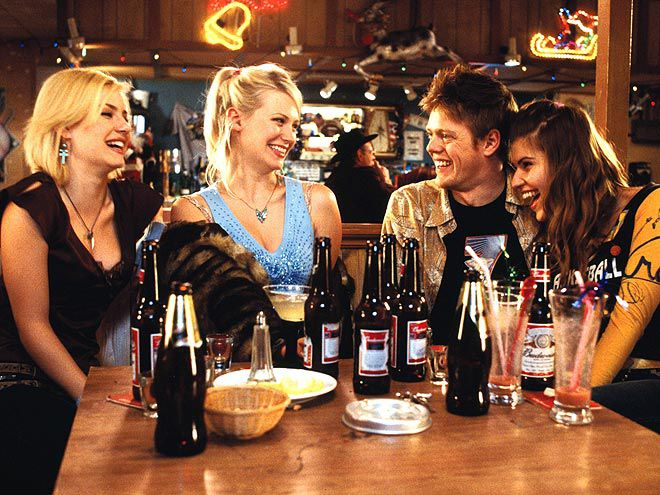
We are off to a rough and cringey start with this story as my least favorite out. Englishman Colin Frissell (Kris Marshall) has absolutely no luck finding romantic partners in England. In fact, he actually repels women with his clumsy personality, awkward jokes, and weird manners. After almost fully giving up hope of love, Colin gets the seemingly brilliant idea of buying a plane ticket to America. With no place to stay, no knowledge of the States, and just his British self, he decides to voyage to Wisconsin (of all places) in an attempt to find a woman. He posits that American women love a man with an accent and that he will most definitely find true love.
This storyline, while providing some comedic relief, was an awkward attempt at trying to incorporate a funny story within more serious ones. While Marshall was perfectly cast as the awkward Englishman who has no luck getting girls, his description of girls just sounds like he is objectifying them. I cringed every time he entered the frame because it would always be Colin either comparing the attractiveness of American and English women or confidently insisting that American women would undoubtedly have sex with him. This storyline had little complexity to it; it seemed like a last-minute effort by the screenwriters to lighten the emotional baggage of the other storylines.
7. A Woman and Her Mentally Ill Brother

Sarah (Laura Linney) has been secretly infatuated with her coworker, Karl (Rodrigo Santoro), for years (two years, seven months, three days and an hour and thirty minutes). Everyone in the office knows—even her boss teases her about it. At the company Christmas party, Karl finally makes a move and asks Sarah to dance. As things start to get romantic at Sarah’s apartment, Michael (Michael Fitzegerald), Sarah's mentally ill brother who lives in a care facility, calls her in distress. There is a critical scene where Sarah debates whether to continue being intimate with Karl or pick up the phone. Ultimately, she chooses to answer the phone, symbolizing her choice for love and responsibility over romance.
As I reflected on this storyline, I wish Karl’s character were fleshed out a lot more. He did not seem to have much substance to his character, and I could definitely tell that this storyline was not as developed as the others. That being said, I truly think this storyline was an important one because of its ability to grapple with more complicated issues than the more lighthearted romances in Love Actually. We see the power of sacrifice, duty, but ultimately familial love, even in the face of romantic desire. I wish we could have seen more snippets of Laura and her brother together to make that connection more real to the audience. Overall, the sentiment and idea were there, but the execution was poor.
6. The Prime Minister of Britain and His Staff Member

While there were definitely more superior stories compared to this one, I got to give it a standing ovation for Hugh Grant’s famous dancing scene where he struts his “Dancing with the Stars” moves around his home office to the song “Jump for My Love”. In this narrative, newly elected Prime Minister David (Hugh Grant) falls for his junior staffer, Natalie (Martine McCutcheon). Despite really liking her, he does his best to distance himself from her for the sake of both of their reputations. However, it quickly becomes clear that not even his care for public reputation can suppress the feeling of love.
When the Prime Minister witnesses the American President making romantic advances toward Natalie, he reevaluates his feelings towards her. Now fully grasping his adoration for her, David desperately attempts to find her on Christmas Eve, ringing the doorbell on every door on the street to find her. While I love the typical cutesy hallmark romance story, I also enjoy watching romantic interests when they have the world at their disposal. I love watching every attempt the Prime Minister makes to get closer to Natalie or distance himself from her because, at the snap of his fingers, he can make almost anything happen.
That being said, I wish there were more scenes where I could fully see the romantic tension between the two. While their awkward interactions at first seemed cute, their relationship never evolved into anything deeper. As a result, I was skeptical of their love when the characters supposedly realized it themselves. Their love story almost didn’t seem believable because of the lack of truly romantic and emotionally packed scenes. The grand gestures that the Prime Minister makes seem more desperate than amorous.
5. The Photographer Longing for His Best Friend’s New Wife

Even though this rating might seem relatively high on my list, I refuse to spare it from my harsh criticism as this storyline defies all codes of loyalty in my opinion. This story is about a newlywed couple and the groom’s best friend, Mark (Andrew Lincoln), during the holiday season. Mark, a photographer, is charged with filming the entire wedding night. He films the ceremony, the afterparty, and the couple as they embark on their honeymoon. The true heartache of this story, however, lies in the fact that Mark is secretly in love with his best friend’s wife, Juliet (Keira Knightley). He attempts to suppress these feelings out of loyalty to his best friend, Peter (Chiwetel Ejiofor), thus setting the stage for the emotional unraveling that drives this storyline forward.
This narrative takes a different approach to what we would expect a plotline to focus on. Instead of following the life of what would be considered the main character, we actually get the point of view of the side character. Love Actually never fails to amaze me in its ability to think of unique perspectives to convey the theme of love. This story was delicately fleshed out in the way that it conveys Mark’s infatuation with Juliet through action more than script. Mark’s feelings are revealed to the audience when Juliet goes to his house looking for the wedding tape. After a few scenes of Mark making up excuses, Juliet gets hold of the tape and starts watching it. In the tape, it is shown that Mark only videotaped close-ups of Juliet and not of the actual wedding because he could not stop staring at her. Few words are spoken in this scene, but Mark’s adoration becomes clearer than ever...
At the end of Love Actually, Mark shows up to Juliet’s house and pretends to be a Christmas caroler so he doesn’t catch Peter’s attention. He silently shows her the cue cards he made, confidently expressing his love for her through words. As he walks away, Juliet runs after him and gives him a kiss.
This storyline would be much higher up on my list if the screenwriters tweaked the ending. The line of loyalty was stepped over in this scene by both Mark and Juliet. While I understand that Mark cannot control his feelings for his best friend’s wife, I think that tricking his friend and expressing his love was not the right move as a friend. I acknowledge that my take is controversial in the fact that Mark expressing his love could be seen as a final act of closure, but I feel that Mark needed to have some form of confrontation with Peter. Additionally, I do not understand why Juliet kisses Mark in the end. While this act might seem like she is saying goodbye to Mark and telling him he needs to let her go, it appears to me that this would only complicate their situation further. All in all, I think that this storyline had all the right elements but needs to be changed slightly in order to be ranked higher than other plotlines in the movie. I get that it’s Christmas time, but that is no excuse to be a bad friend or wife.
4. The Rock Star and his Manager

You’ve heard of the term bromance many times. Well, this relationship is the ultimate definition of bromance, so buckle up! This storyline follows an aging rock star named Billy Mack (Bill Nighy) who records a cheesy Christmas song in an attempt to revive his career. Even though he mocks his own song and repeats several times how awful this new single is, it ends up becoming a hit.
What I loved most about this storyline was the focus on the aspects of a loving relationship that we do not typically think about. We often associate love with romantic relationships, but this storyline pivots from that typical narrative and focuses on the meaning of friendship. Billy’s fame skyrockets because of his new single. He gets invited to various TV shows and extravagant holiday parties with A-list celebrities—such as Elton John. However, in the end, Billy decides to spend Christmas with his loyal manager, Joe (Gregor Fisher).
This heartwarming decision reveals, yet again, the essence of the holiday season: love. I absolutely love how we, as viewers, do not have to sit through nine stories of just standard romances. Instead, we get diversity within the movie. Love Actually understands the meaning of love in all contexts–exactly what I want to see in a holiday movie. Additionally, this storyline perfectly delivers a dose of lightheartedness amongst the more serious stories. While I enjoyed the hilarious moments when Billy says the most unfiltered comments during his TV interviews, the funniest moment occurs when Billy announces that he will sing his song stark naked on live TV on Christmas Eve if it reaches the number-one spot as a Christmas song (spoiler alert: it does!).
3. Husband Has an Affair with His Secretary

Harry (Alan Rickman), a married man with kids, finds his seductive secretary, Mia (Heike Makatsch), flirting with him constantly in the office. Although given multiple chances to turn her down, he ultimately pursues her, gifting her an expensive necklace, while getting his wife, Karen (Emma Thompson), a Joni Mitchell CD. Karen ultimately discovers that the necklace, which she reasonably believed to be her Christmas present, was for Mia instead.
To start off, Emma Thompson's acting skills are so refined that no one could rival her in this role. She is able to be serious, heartbroken, sad, and confused simultaneously while masking it behind a thin smile. This skill is crucial as she plays a mother who wants to shield her kids from her marital problems. When she confronts her husband, she cries in a way that is genuine and understated, forcing the audience to feel those same emotions because they feel real on screen.
The nature of Harry's cheating on Karen is nuanced in itself. It is important to note that the film never discloses whether Harry went beyond flirting. The audience can only know for certain that he cheated emotionally, leaving the extent of the affair up for interpretation. I love this element of this storyline because it leaves the audience pondering questions of trust, intention, and the true definition of “cheating," even after the film ends. This layer also plays a crucial role in how this storyline concludes. Karen confronts Harry about the affair. While he confirms it, they still remain married. Is emotional cheating less damaging than physical betrayal? Does the ambiguous extent of Harry’s cheating allow for their marriage to be mended? That is something for us viewers to figure out (and discuss amongst ourselves with a warm cup of hot cocoa).
2. Writer and Housekeeper Fall in Love Despite the Language Barrier
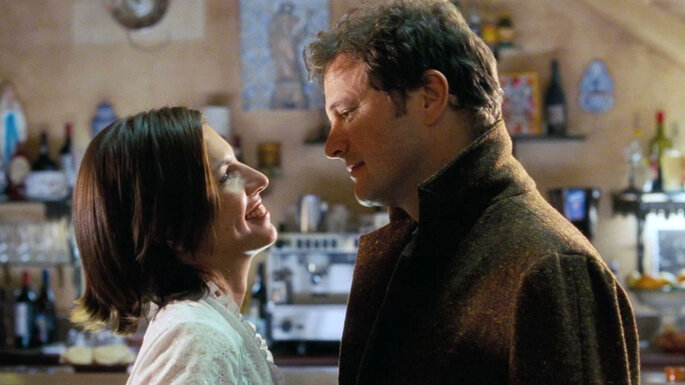
This storyline is a blend of every classic love trope ever invented. It combines forbidden romance, right person, wrong time, grand romantic gestures, love at first sight, artist and the muse, and of course, cross-cultural romance. After a writer named Jamie (Colin Firth) discovers that his girlfriend is having an affair, he retreats to the outskirts of France to work on his novel alone. There, he meets Aurélia (Lúcia Moniz), a Portuguese housekeeper. They fall in love with each other despite the language barrier, embracing the silence and company of each other.
This narrative, as I stated previously, encapsulates everything I would want from a love story in a film. Love Actually perfects the art of creating an ultimately surmountable obstacle that comes between the two lovers, making their relationship ten times more romantic. Each scene is carefully crafted, with both actors speaking at a slow but intentional pace. Both Firth and Moniz portray their characters with slight awkwardness and lots of sincerity, despite the gap in language. My favorite scene is when Aurélia and Jamie are talking about the genre of Jamie’s novel. Aurélia tries to act out the various genres, such as horror, romance, and adventure, while Jamie looks at her blankly until he finally gets it. It is little scenes such as these that work towards building real chemistry between the characters. And the best part about this storyline is the way all these cute moments culminate into the ending: Jamie finds Aurélia in her hometown a year later and proposes to her in Portuguese. She says yes in English. Pause. Just sit there for a second and process the flawlessness of this ending. It’s enough to make anyone (including me) cry tears of joy. This is what I would call a hopeless romantic’s dream ending.
1. Stepfather and Stepson

With Liam Neeson playing the main character in this story, this was obviously going to take the cake as my number one choice. Daniel (Liam Neeson), recently widowed and grappling with his own grief, struggles to reconnect with his 13-year-old stepson, Sam (Thomas Brodie-Sangster). They are able to build a connection amidst their grief when Sam reveals his feelings for a girl in his class named Joanna (Olivia Olson).
For starters, this storyline around Sam was absolutely adorable and a perfect demonstration of young love. The film does an excellent job expressing a kid’s desperate attempts to woo their crush—specifically, when Sam decides he wants to learn the drums to impress Joanna. Sam also demonstrates the overblown feelings that young kids feel when they are (or think they are) in love. He experiences moments of extreme highs where he is sure that his drumming skills will catch Joanna’s attention; extreme lows where he feels like he will never experience love again, if not with Joanna. All these scenes perfectly encapsulate how love is experienced by youths.
This narrative ends with Sam running through the airport to chase after Joanna before she leaves to go back home to America. While cliché and logistically impractical, I loved how whimsical it was to see Sam avoid security and chase after the “love of his life.” And his efforts were not in vain, as he got a goodbye kiss as Joanna was about to board. Young love is by far the cutest thing to watch unfold on screen.
Taking a step back, we see the bigger love narrative outside Sam’s love story: we see how love manifests between Daniel and Sam. The contrast between the initial interactions and tone of the end is starkly different: what starts as a disconnected relationship flourishes into a strong, loving connection through the task of helping Sam pursue his crush. Additionally, the story arc is able to carefully show how Daniel is able to process and grow from the grief of losing his wife. Through helping Sam, Daniel learns to cherish the loved ones around him and ultimately reaches a point where he is even comfortable dealing with the possibility of new love.
Overall, while this movie was not spared my wrath when it comes to film criticism, Love Actually earns the number one spot out of all Christmas movies in my eyes (that’s a whole other article but take my word for it for now). For all the new Love Actually watchers, I implore you to try and watch the movie without my storyline ranking in mind and to formulate your own ranking yourself (you’ll see that I am right). I hope you will consider watching Love Actually and making this British classic a part of your annual holiday festivities.
Nicole Au is a freshman at Columbia University studying Psychology and Film. When not sharing her love of film, she likes to bake, paint, find new food spots in the city, and do anything Christmas-related. She has watched Love Actually a total of 6 times (probably 8 by the time Christmas comes around).