
Why Do We Re-Adapt What We Still Remember?
It has begun. The moment whereupon our cinephile savvy is caught up by blasphemous ignorance. In such moments, you dare not mention that you enjoy cinema anymore because there lurks in the shadows a familiar, an acquaintance, anybody who might be sufficiently tactful to hurt your ego with a simple but genuine: “What do you mean you never saw Pulp Fiction?!?!” (These are markers of something far more profound than can be expressed on the page).
While these naysayers might not always comprehend the full extent of what they say and while they rejoice in this cinephiliac Schadenfreude (all despite watching five movies in their entire life), this unfortunate desolation is a common attribute to many film enthusiasts.
I address you this today because not long ago, this oblivious echo came to me while watching a new Netflix series: Ripley. For those of you who did not have the pleasure of marvelling in its splendour or basking in its close-to-perfect photographic direction, please take the time to indulge in this pleasure. As I exhaled after sitting intensely through it, Netflix–as it so calmly and compulsively does–guided me toward another film: The Talented Mr. Ripley. At first, I found this peculiar, but once I read the description and saw that it was the same story as the one I had just finished, I quite frankly found it humorous. “You might also like” why, thank you, Netflix’s algorithm. How common of a name did I think Ripley was, anyway?

A similar story unfolded when I negligibly watched One Day, seeing the amount of interest it provoked amongst Netflix enthusiasts and wondering what all the fuss was about. Not understanding its appeal but later evoking it in conversation with my aunt, she offered that the movie itself was a marvel in its day. Dumbfounded once more, I started noticing a pattern: movies that I could have watched not 30 years ago, had I been more attentive or aged, were being readapted in quite quick succession.
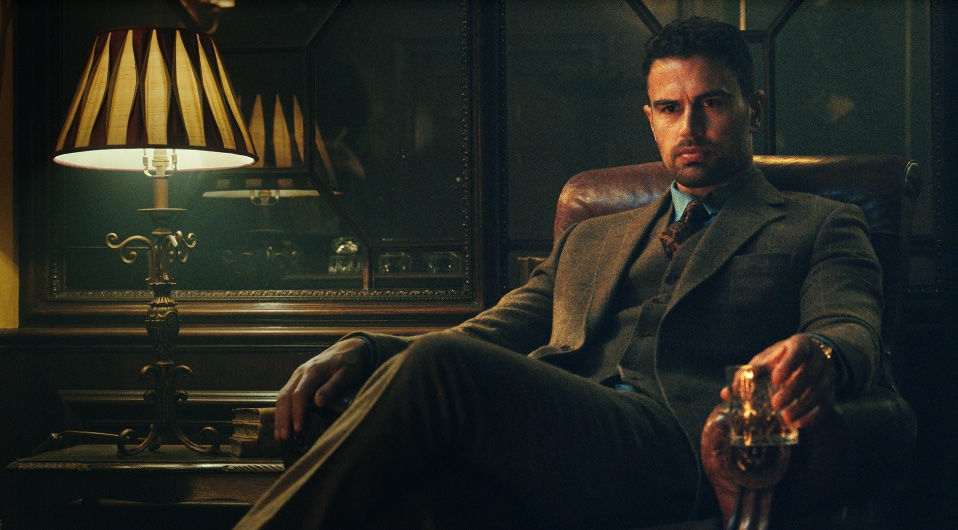
In looking closer at Ripley and One Day, both adaptations were released in 2024. However, while Ripley has about 25 years separating it from its ancestor The Talented Mr. Ripley, merely 13 years separate the One Day movie from the series. Soon, this motif propagated: The Gentlemen with Theo James surfaced in 2024 as a derivation of Guy Ritchie’s action comedy merely 5 years after its cinematic release and most recently, this supposed trend was withheld thanks to The Four Seasons–adapted from the 1981 film of the same name–starring Tina Fey and Steve Carell.

At some point, an implacable evidence knocked on my conscience that this was indeed happening–yet my mind still failed to make sense of it. If I were to stay fixed to my judgments, without even questioning their necessity, I would argue that these adaptations were not all successful. Far from me would be the impulsion to negate their existence and say that they don’t deserve to have been made, but I wondered: Was this all about reinvigorating deserving stories or was there something more?
Thereafter, just like a wondrous Baader-Meinhof phenomenon (you know, that frequency illusion that makes you see something everywhere once you learn of its existence), I started noticing it everywhere. Apart from the few I have mentioned, there were all the Kobra Cai, XO, Kitty, Percy Jackson and Harry Potter adaptations that shot up in my newly-disillusioned quotidian. Of course, these must be set apart as they are franchises, the first two being extensions of the movies and the second two being intent on telling in much more detail what the movies could not capture. Given the limited time and general restriction in resources that TV shows do not have to face, these choices of adaptations could have been cost-efficient as much as they could have been profit-maximising… but let the record show that they are borne in mind.
So it seems that after the emergence of superhero fatigue and with live-action movies taking a hit (since they apparently offer nothing new and no longer satisfy the expectations of audiences), a new phenomenon has taken the time to appear… the adaptation of movies into series.
[Though, if I were to put my word in, I would rename this fatigue to the commonsense rejection of prosaicity, which refers more likely to not wanting to see the same things over and over again rather than a specific aversion to superheroes. It also ties into the gradation of powers: I mean, once you’ve created a set of characters, you don’t have to create new ones that are more and more capable of single-handedly destroying the universe with a flick of the finger.]
Additionally, many of these are in fact adaptations of newer movies into limited series. That is a curious combination, especially in a world where comment sections spill over with people wanting more of a movie they like while saying that producing a sequel compromises the sanctity of the original. Now, where does this trend come from, what does it indicate and is it good or bad?

The simplest and surely one of the most righteous explanations that comes to mind is that this trend is industrial. Streaming platforms are engaged in a perpetual marathon of recognition and it might be easier for them to adapt a movie from 1990 or 2010 because such stories aren’t as hard a sale as original scripts. Therefore, there is the incentive of an economic guarantee that comes with risk-averse cultural recycling, especially if it can be done at algorithmic speed. In such a situation, there is no need to innovate–simply take from the catalogue of hits over the years that people will more easily remember than the failures. The process itself is accelerated if the platform already owns the rights (that have not had time to wane) and thus cost-efficiency accompanies the low risk of readaptation. With viewers being comforted by familiarity, it doesn’t matter if they’re treated to two different Elvis Presleys and four different Frankensteins in a single year, because who can fault new interpretations of stories that are loved and cherished? These quick successions of Presleys and Frankensteins (amongst others) are somewhat curious because it would indicate that multiple directors got the same idea more or less at the same time. But anyway, that is not the point. Who can resist a sure success? But, on the other hand, is it narratively necessary?

Another idea that comes to mind emanates from the observation of contemporary cinemas’ current releases: Is there space for non-Oscar-nominated pictures anymore? Undoubtedly, this is a broad question. Indeed, one must consider that not every movie that comes out will be nominated, but they do reflect on where we should stand in regards to mid-budget movies that might appeal to audiences without intensively luring them to the shade of cinemas. I cast no doubt over certain movies being expressly made for the cinema but should they not all be? Undeniably, a divide exists between excellent movies and shambolic propositions which, if not partially explained by budget alone, can be incentivised by it. Nonetheless, it seems as though these mid-budget movies might not always have as secure of a place in the cinema, with many popping in for a two-week performance before being sacked. With the ascension of television, limited series and short-format programs now offer such movies a smooth migration, one from which they take up more space, a longer duration, proper narrative excavation and even offers them the possibility to adapt as time passes. An added bonus is that they can now be directly accessed by interested parties without physically burdening them. We wouldn’t want them to suffer from Hollywood’s inequitable budget allocation now, would we?
Nonetheless, artistic and efficiency considerations remain: Do limited series actually use more time well? Does this alluring transition strengthen storytelling or does it weaken cultural imagination? It is all fun and games to justify such a format by promising to compensate for “what the movie couldn’t show in two hours,” but do these new longer-form stories enrich the field or do they indicate the disappearance of mid-budget originality? After all, the lacklustre nature of irresolution does bear charm, sometimes.

Let’s take the example of Ripley which, as mentioned earlier, is derived from The Talented Mr. Ripley. The 1999 film featured Matt Damon, Gwyneth Paltrow, Jude Law, Cate Blanchett, Philip Seymour Hoffman and so on. From the cast and premise alone, I could have assured, even without knowing it for sure, that it was a huge hit. And indeed, it fared very well at the box office. Whatever this meagre indicator might have told me and being neither conscious nor born in 1999, I would have worked with the assumption that this film was seen as a success either way. I don’t exactly know what happened to ratings and budget comparisons for everything to go downhill from there but anyway... It was a success. In which case: Why remake it? Why rework something that worked and that has barely had time to have a quarter-life crisis? Ripley’s reimagining of the original thriller into some sort of black-and-white chiaroscuro is decidedly artistic, bewilderingly sumptuous and nothing short of what film is all about but… why?

My working theory for this is that TV programs that are often seen as narratively stimulating, mysterious, and intriguing also want the badge of psychological earnestness. Not looking so much to culturally self-correct, capture from another angle, or reframe the past through the moral lens of the present, these remakes might intend to procure the audience with a newfound pleasure. If familiarity strokes the mind, recognition strokes the ego as the viewer can now delve into a story being able to compare separate formats of adaptation and their ability to satisfy narrative progression. It might be valuable and intellectually giddying to behold a wider variety of performances and aesthetic directions but it can rapidly become tedious, overbearing, and quite frankly, confusing. As mentioned earlier, what does having fifteen versions of a single character bring to the character’s psychology? Film criticism might flourish in diverse polarising opinions but fundamentally, characters aren’t humans so treating them as such doesn’t make sense.
Another possible approach might be that the not-so-old stories are retold because nostalgia has already started to set in. In an age where everything moves much faster than it used to and consumption of media especially urges Hollywood to satisfy transitive needs of simultaneously new, old and short stories, expectations must be met. This is just a wise person’s way of saying that a new generation will require something different from the previous one. Quite interestingly, whereas innovation has always been the crux of cinema, flashbacks seem more prevalent nowadays. Nostalgia is in some sort of fast-forward period, where we often hear people complain about how “we don’t make movies like this anymore” or how everything was better before–such people evidently not knowing what they are saying, or saying it purposefully (which might be worse). This reframing of 25-year old stories, which to similarly-aged viewers seem to have come out when dinosaurs were still alive, might be a response to this.

Even as I exhorted myself to dismiss any research that might indicate that this is yet another phenomenon of content consumption and diminishing attention span–because evolution happens and I am not one to dwell on humanity’s self-annihilation–it finds a way to slither back into a very probable theory. As such, people thrive on rediscovering the stories either they or their parents once loved as a way to bridge the gap between generations as well as the disparity between a time when everything was new and exciting and one that suffocates on its own lack of creativity. Being able to bring stories back in a fractionally different setting and cultural context enables platforms to fill the three categories mentioned above: One Day (the series) was new (as in, it came out looking fresh and young off the press), old and short (fourteen 20-minute episodes). From then on forth, let the people eat their cake. Furthermore, in this sense, it almost becomes a cultural reflex to preserve stories that comfort audiences before they have a chance to fade.

Another theory I cannot stand to ignore is the ideological edit. The subtler motive of these remakes lies in rewriting the past to suit present values. This is a very controversial motivation and as Christopher Nolan suggests, let us not bade in politics, let us rather tell stories. Percy Jackson is a perfect example as the new series set out to correct its casting politics (as well as make reparations for the movies only telling a sliver of the story). The upcoming Harry Potter recounting will be of equivalent amplitude, Snape’s new actor already having been cast and sparking interesting debates. One Day itself was reworked from a glossy tragedy to emotional realism not to rephrase an errant value but to become more timely and appropriate. So each readaptation could constitute a mild act of moral housekeeping, at times illuminating, but sometimes just acting as a tick made on a self-referencing pop-culture politics statement.
As mentioned earlier, when I was told by Netflix’s algorithm that I might enjoy the movie the TV show I just watched was inspired by, it crudely represented streaming’s cycle of repetition. Once you have expressed interest in something, executives are notified and see a ready-made audience for projects that tick the same boxes. In the case of series, ten hours are offered instead of two, so retention becomes an obstacle but it also gives them more time to license, analyse, and keep viewers invested and subscribed. Cliffhangers don’t grow on trees but on personal data, you should know that by now.

“Now,” what an interesting word and an even more ambiguous line of inquiry. Why now? If we put all of the hypotheses we have made together, a pattern emerges: economic caution meets aesthetic aspiration meets cultural anxiety (the new Bermuda Triangle). While reductions of these adaptations to a new shape of business models are disguised as modern outlets of introspection, they also express something about humans. This new style of reiteration tells the story of individuals who fear that stories–like everything else in our streaming queue–might disappear if we don’t keep them relevant. Cultural preservation becomes a pervasive feedback loop of stories that insist that the old version isn’t quite definitive, refined or finished. The longer this trend goes on, the longer movies are stretched out, and the more this fear will dissipate while tracing a trajectory opposite to our ability to concentrate. After all, this shouldn’t be new: everyone has that one TV show which lies dormant in their watchlist, that they have yet to start but that they are happy to know is there. Much like this reassuring presence in our watchlists, readaptations become a necessary comfort because while not all versions will have the same amount of success, having them will always be better than not having them.

Whether this is a crisis or a curiosity depends on how charitable you feel. It might be tedious and easy to call it creative exhaustion, for both narrators and audiences. After all, some feel outraged by the mere mention of telling the same story more than once, as their opinion is very well accounted for on social media. We thank them for their service. However, the fact is that it works and that the same people are in fact consumers of the very thing they are criticising. Furthermore, I would want to ask them where they are when original screenplays actually come out. There’s a reason everything is called a “flop” nowadays–and it refers more to commercial success than quality, although some still don’t make the distinction. While placing blame is difficult due to the price of going to the cinema in the US, many should keep their hate informed, at the very least.

In some sense, we can see this trend as the excavation of the recent cultural past, which tries to understand why it matters and how it still might. Interestingly, this ties into why we seem to remake the near-past more readily than the more distant one. Older stories seem more settled and perhaps less relevant or adaptable. To that end, classics are held in a distinct regard–their reassertion plausibly being a mix of preservation, correction and recycling. However, whether we revisit last week’s phenomenon for something deeper than money or politics is still up for debate. As this article has explored, the motivation behind these adaptations could be about reinvigorating deserving stories or it could very well be to ensure commercial success, ideologically edit anachronic values, artistically redesign, psychologically comfort and so on. In whichever way it can be framed, this trend remains worth noticing.
Leny Kasparian (CC’28) is majoring in Psychology and Economics, and is an avid AMC Stubs A-List member. Recently initiated to Letterboxd, he promises to catch up to everyone soon, though he does not think it is possible to have a Top 4; that is a myth.